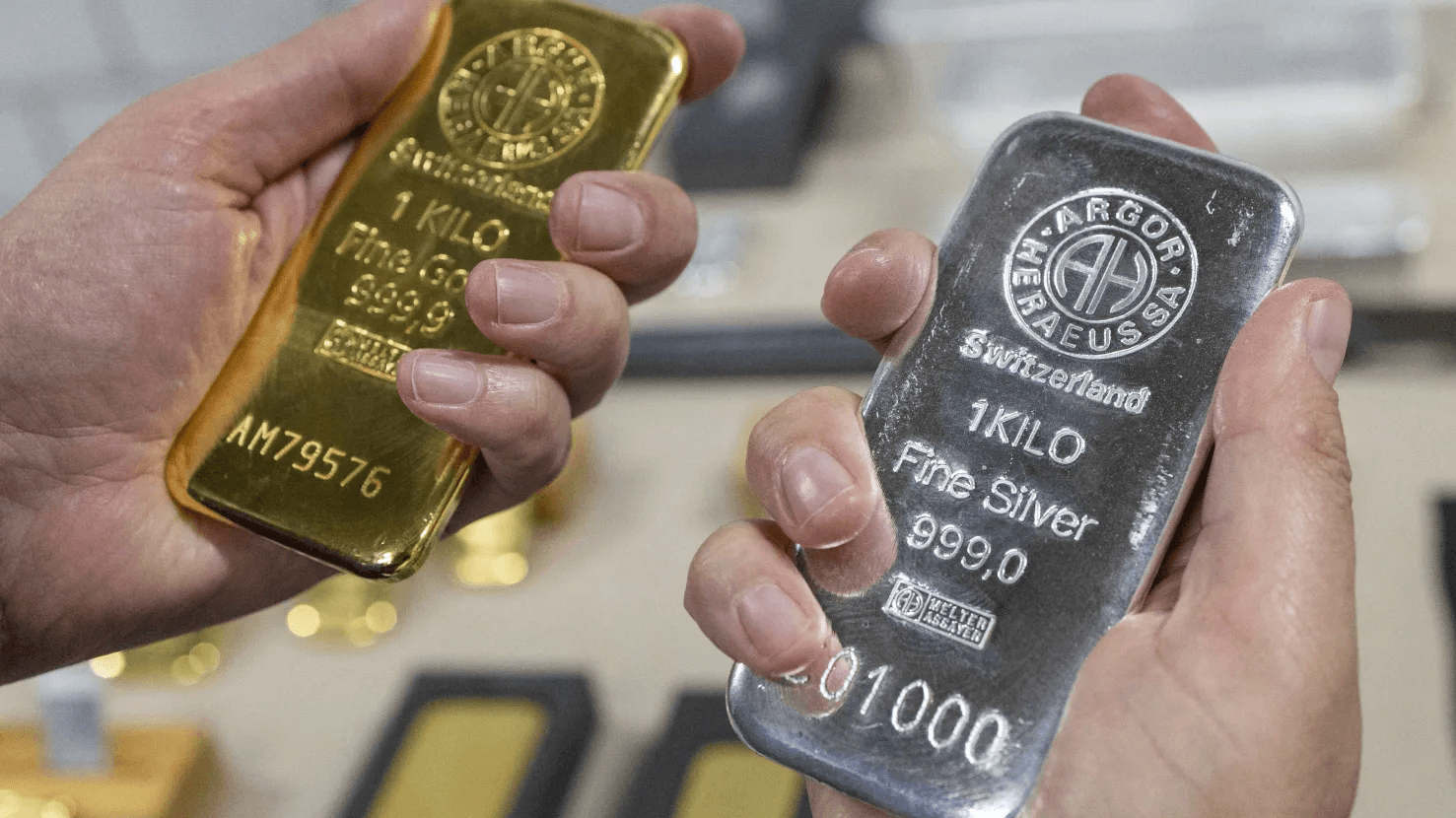
Gold and Silver Prices Plunge as Dollar Strengthens and Fed Expectations Shift
Gold and silver prices fell sharply after a rapid reversal in market expectations around U.S. monetary policy, the strength of the dollar, and future Federal Reserve leadership. The sell-off erased a large portion of the extraordinary gains both metals had accumulated during their recent surge to record highs.
A Sudden and Violent Price Reversal
Gold prices dropped by roughly 10% in a single session, while silver suffered a far more dramatic collapse, falling more than 25%, marking one of its steepest one-day declines in decades. The move followed a period of intense speculative buying that had pushed both metals to historically elevated levels.
Just days earlier, gold had been trading at unprecedented highs, while silver had surged well beyond levels typically justified by industrial demand alone. The speed and scale of the rally left markets vulnerable to a sharp correction once sentiment shifted.
The Catalyst: A Change in the Fed Narrative
The primary trigger for the sell-off was renewed confidence in the U.S. dollar and expectations that monetary policy will remain tighter than previously assumed. This shift followed political signals from Donald Trump, including support for Kevin Warsh as a potential future chair of the Federal Reserve.
Warsh is widely viewed by markets as favoring a more traditional, disciplined approach to monetary policy, reinforcing expectations that interest rates may stay higher for longer. That perception undercut one of the key pillars supporting the rally in precious metals: the belief that aggressive rate cuts and currency debasement were imminent.
Why a Stronger Dollar Hurts Metals
Gold and silver are priced in U.S. dollars, so when the dollar strengthens, these metals become more expensive for international buyers. A rising dollar also reduces the appeal of metals as an alternative store of value, particularly when interest-bearing assets become more attractive.
At the same time, higher real yields increase the opportunity cost of holding gold and silver, which do not generate income. As Treasury yields firmed and the dollar rallied, investors rapidly unwound positions that had been built on expectations of looser financial conditions.
Profit-Taking Amplifies the Fall
The magnitude of the decline was intensified by heavy profit-taking. After months of steep gains, speculative positioning in both gold and silver had become crowded. Once prices started to fall, automated trading strategies and margin calls accelerated the sell-off, particularly in silver, which is historically more volatile than gold.
Silver’s dual role as both a precious and industrial metal also added pressure, as traders reassessed demand assumptions that had been embedded into recent prices.
A Correction, Not a Structural Collapse
Despite the severity of the move, many analysts view the sell-off as a reset rather than a long-term breakdown. The underlying factors that initially supported metals, including geopolitical uncertainty, large fiscal deficits, and long-term inflation concerns, have not disappeared.
However, the episode highlighted how dependent recent price levels were on expectations of rapid monetary easing and dollar weakness. Once that narrative shifted, prices adjusted quickly.
What Comes Next
In the near term, volatility in gold and silver is likely to remain elevated as markets recalibrate expectations around U.S. interest rates, central bank independence, and currency strength. Further dollar gains could keep pressure on metals, while any renewed signs of policy easing or financial instability could revive demand.
Longer term, investors are now more cautious, with many emphasizing the need for stronger fundamental support before prices can sustainably revisit recent highs.
30.01.2026